

Wedding Planning Guide: How to Plan Your Perfect Wedding From Start to Finish
Wedding planning starts with four decisions: your budget, your guest count, your date, and a timeline that keeps every task on schedule. Get those four right early, and the hundreds of smaller choices that follow flowers, food, seating charts become far easier to make.
Most couples feel a mix of excitement and dread the week after getting engaged. There’s a venue to find, a guest list to argue over, vendors to research, and a hundred small decisions that nobody warned you about. None of that means something has gone wrong. It means the planning hasn’t been broken into steps yet.
This guide breaks wedding planning into clear, ordered steps, from the day you get engaged to the morning you walk down the aisle. It works for a 30-person backyard wedding and a 300-person ballroom reception alike, on any budget, in any country.
What Is Wedding Planning and Where Should You Start?
Wedding planning is the process of organizing every part of a wedding budget, guests, venue, vendors, attire, and timing so the day runs smoothly from start to finish.
Start with a conversation, not a Pinterest board. Sit down with your partner and answer three questions: How much can we spend? Roughly how many people do we want there? What time of year feels right? These three answers narrow down almost every choice that follows, including which venues are even worth touring.
Step 1: Set a Realistic Wedding Budget
Your budget decides what’s possible before you fall in love with something you can’t afford.
Start by identifying who is contributing: you, your partner, parents, or a mix,x and add up the total. Then split that total across categories: venue, catering, attire, photography, flowers, music, and a buffer fund. Wedding planners typically recommend setting aside 5 to 10 percent of the total budget for unexpected costs, because something always comes up: a last-minute alteration, extra chairs, a vendor fee you didn’t see coming.
Write the numbers down in a spreadsheet instead of keeping them in your head. On average, couples in the United States spend around $33,000 on a wedding, but plenty of weddings cost a fraction of that. The number that matters is the one that fits your life, not a national average.
Step 2: Create Your Guest List
Guest count drives most other costs, which is why it belongs early in the process. A 300-person wedding and a 50-person wedding are two different events in terms of venue size, food budget, and total spend.
Build a first draft with your partner, then sort names into three tiers: must invite, would like to invite, and invite only if the budget stretches. This makes trimming the list later far less painful, since the flexible names are already marked.
Plan for roughly 10 to 20 percent of guests to decline. Budgeting for a full house when a fifth of your list won’t attend leads to wasted spending on food and seating you don’t need.
Step 3: Choose Your Wedding Style, Theme, and Vision
Before booking anything, settle on a general mood: classic, rustic, modern, or bold and colorful. The theme doesn’t need fifty details; a color palette and a clear feeling are enough to guide decisions later.
This vision becomes a filter. When two venues or two flower arrangements are both within budget, your theme tells you which one actually fits the day you’re picturing, instead of leaving the choice to guesswork.
Step 4: Pick the Wedding Date and Location
Date and location depend on budget, guest list, and venue availability. Weekend dates during peak wedding season, late spring through early fall in most of the U.S., cost more and book faster. A Friday wedding or an off-season date can lower venue costs significantly.
Think about your guests’ travel too. If most are local, a weekday date might work fine. If many are flying in, give them enough notice to book time off and flights, especially for a destination wedding.
Step 5: Find and Book the Perfect Wedding Venue
The venue is usually the first major booking and often the largest single expense. Popular venues get reserved a year or more ahead, so start touring as soon as your budget and guest count are set.
During tours, ask about capacity, what’s included (tables, chairs, linens), catering restrictions, parking, and a backup plan for outdoor spaces. Get every promise in writing, including cancellation and rescheduling terms, before signing anything.
Step 6: Hire Your Wedding Vendors
With the venue locked in, move on to the team: photographer, caterer, florist, musician or DJ, officiant, and hair and makeup artist. Photographers in particular book up fast, sometimes a year or more out, so reach out early.
Read reviews, ask to see full galleries or past events (not just highlight reels), and talk to a vendor directly before signing. A vendor worth hiring listens to your vision and answers questions clearly instead of pushing a package. Get pricing, deliverables, and cancellation terms in writing every time.
Step 7: Plan the Wedding Ceremony
The ceremony is the actual point of the day, so it deserves early attention, not leftover time. Decide whether it will be religious, civil, or personal and non-traditional, then confirm what your officiant needs from you: marriage license paperwork, premarital counseling, or a rehearsal.
If you’re writing vows or choosing readings, start drafting months ahead rather than the week before. That gives you room to revise, cut what doesn’t work, and actually practice saying them out loud.
Step 8: Choose Wedding Attire and Accessories
Wedding attire often takes longer than expected, mostly because of alterations. Start shopping for the dress or suit 8 to 10 months out, since custom orders and fittings can stretch across several months.
Don’t leave the small pieces for last: shoes, jewelry, undergarments, and attire for the wedding party. Schedule a final fitting close to the wedding date, after any expected changes in fit, so everything sits right on the day.
Step 9: Plan Food, Drinks, Cake, and Guest Experience
Food and drink are often what guests remember most clearly. Schedule tastings with your caterer, and confirm options for dietary needs vegetarian, vegan, gluten-free well before the final headcount is due.
Decide on the bar setup based on budget and preference: full open bar, a limited selection, or none at all. Book your cake baker early, especially during busy months, and confirm flavor, size, and delivery time in writing.
Step 10: Send Invitations and Manage RSVPs
Save-the-dates typically go out 6 to 8 months ahead, earlier if many guests are traveling. Formal invitations follow 6 to 8 weeks before the wedding, with an RSVP deadline set 3 to 4 weeks out so final numbers reach the caterer and venue in time.
Track responses in a simple spreadsheet: attendance, meal choice, plus-ones. This single habit makes seating charts and final counts far less stressful when the deadline hits.
Step 11: Plan Décor, Flowers, and Wedding Details
Décor is where the theme becomes visible: centerpieces, table settings, lighting, signage, and flowers for both ceremony and reception. Share inspiration photos with your florist or decorator, so they see the exact look you’re aiming for, not a rough description of it.
Small details carry weight: guest books, favors, place cards, and any personal touches specific to you as a couple. None of these need a large budget to matter; the simplest personal touches are usually the ones guests bring up afterward.
Step 12: Arrange Wedding Photography and Entertainment
Photos and video are how the day gets replayed for decades, so pick a photographer whose past work actually matches your taste. Book a consultation ahead of time to walk through must-have shots and any family group photos you don’t want missed.
For entertainment, share must-play and do-not-play song lists with your band or DJ well in advance. Confirm arrival time, equipment needs, and how announcements will be handled through the reception.
Step 13: Plan Transportation and Guest Accommodation
Work out how you, your wedding party, and your guests will move between locations, especially if the ceremony and reception aren’t in the same place. Book transportation early if the schedule is tight.
For out-of-town guests, reserve a block of hotel rooms at a group rate if one is available. Share hotel details, maps, and parking information in your invitation suite or on your wedding website so guests aren’t scrambling to find them the week before.
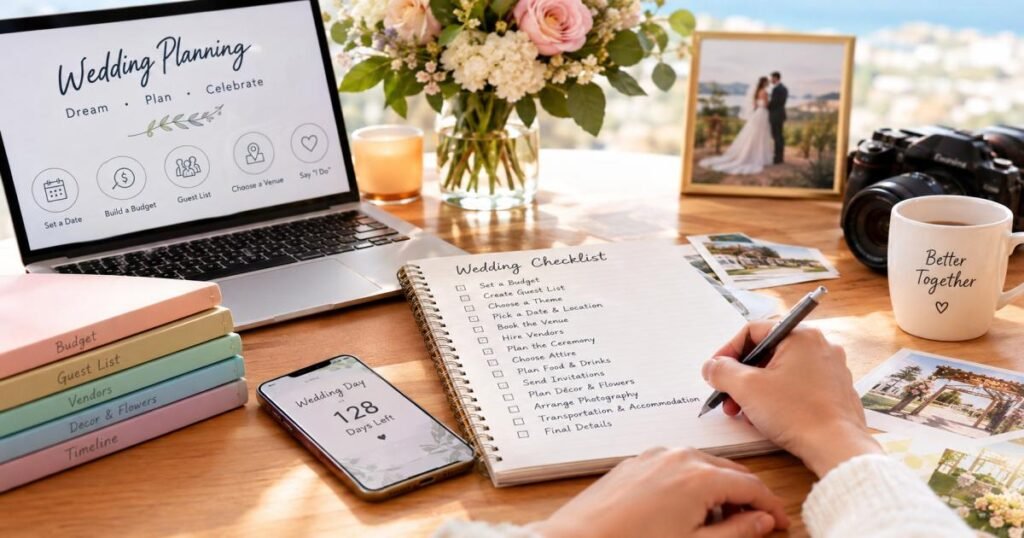
Wedding Planning Timeline: Month-by-Month Checklist
Breaking the process into monthly blocks turns one overwhelming task list into a series of manageable ones.
12+ Months Before the Wedding
Set the budget, build the guest list, choose a date, and start touring venues. This is also the time to shortlist a wedding planner, if you plan to hire one.
9–12 Months Before
Book the venue, hire the photographer and caterer, and start shopping for attire. Send save-the-dates if guests need travel time.
6–9 Months Before
Book the remaining vendors: florist, musician, hair and makeup, and start planning the ceremony structure. Reserve hotel blocks for out-of-town guests.
4–6 Months Before
Order invitations, schedule menu and cake tastings, and finalize the registry. Begin dress or suit fittings.
2–3 Months Before
Send formal invitations, confirm details with every vendor, and finalize readings or vows.
1 Month Before
Confirm the final guest count from RSVPs, lock the seating chart, complete final fittings, and confirm vendor timelines in writing.
1 Week Before the Wedding
Confirm final numbers with the caterer and venue, prepare vendor payments and tips, pack for the honeymoon, and hand off day-of tasks to someone you trust.
How to Create a Wedding-Day Timeline
A detailed hour-by-hour schedule keeps the wedding day moving without rushing anyone. Start from the ceremony time and work backward, building in buffer time for hair, makeup, travel, and photos.
Share the finished timeline with your wedding party, vendors, and immediate family a week or two ahead. When everyone works from the same schedule, small delays stay small instead of cascading into the next event.
Final Wedding Checklist: What to Confirm Before the Big Day
In the final days, confirm arrival times with every vendor, settle final payments and gratuities, verify marriage license paperwork, and pack an emergency kit: safety pins, stain remover, pain relievers, a sewing kit. Assign one trusted person to field small problems so they don’t reach you on the day.
Common Wedding Planning Mistakes to Avoid
The same mistakes show up again and again: a budget with no buffer, a guest list that outgrows the budget, vendor contracts signed without reading the fine print, and a final month packed with tasks that should have started earlier. Unclear expectations with family members cause more stress than almost anything else on this list; a short conversation early on prevents most of it.
Wedding Planning Tips to Save Money Without Ruining the Experience
A smaller budget doesn’t mean a smaller experience. An off-peak date or a weekday wedding can cut venue costs substantially. Trimming the guest list does more for the total bill than almost any other single change, since nearly every cost scales with headcount.
Local, in-season flowers cost less than imported blooms and often look better in photos. Renting attire and décor instead of buying new can also free up real money. A venue that works for both ceremony and reception cuts transportation costs and rental fees at the same time.
How to Make Wedding Planning Less Stressful
Break tasks into small pieces instead of tackling the whole list in one sitting. A shared planning app or spreadsheet keeps both partners aware of deadlines without one person carrying the mental load.
Set a regular time each week to talk through planning, separate from everyday conversation, so wedding logistics don’t take over every dinner. And protect time together that has nothing to do with the wedding; the relationship is the actual point of the day.
Wedding Planning for Different Types of Weddings
Small and Intimate Weddings
Fewer guests mean more budget per person for food, décor, or a smaller premium venue. Planning timelines can also shrink, since there’s less to coordinate.
Large Traditional Weddings
These need earlier bookings, tighter logistics, and often a day-of coordinator to manage the number of moving parts.
Destination Weddings
Give guests as much notice as possible, check local marriage laws ahead of time, and consider a local planner who already knows the venue and area.
Budget-Friendly Weddings
Put money toward the few things that matter most, and find lower-cost alternatives everywhere else: a home reception, potluck-style catering, DIY décor.
Outdoor Weddings
Always have a weather backup plan, and check permits, restroom access, and power availability for lighting or sound equipment ahead of time.
Last-Minute Weddings
Handle the essentials first: legal paperwork, a venue, and an officiant. Décor, favors, and extras can be trimmed or skipped without changing what the day means.
Final Thoughts
Wedding planning gets manageable the moment it’s broken into steps instead of treated as one giant task. Start with budget, guest list, date, and a timeline, and the rest of the decisions fall into place around them. Whether the day is thirty guests in a backyard or three hundred in a ballroom, the same five things budget, guest list, venue, vendors, and timeline carry the entire process. Plan early, keep the numbers visible, and leave room in the schedule for the two of you to actually enjoy getting married.
FAQs
How long does wedding planning usually take?
Most couples spend 9 to 12 months planning a full wedding. It can be done in a few weeks or stretched over two years, depending on venue availability and personal preference.
What should be booked first for a wedding?
The venue comes first. It locks in the date and guest capacity, which shapes nearly every decision that follows.
How do you plan a wedding on a small budget?
Trim the guest list, choose an off-peak date, and put money toward the handful of things that matter most while cutting costs everywhere else.
How far in advance should wedding invitations be sent?
Formal invitations typically go out 6 to 8 weeks before the wedding. Save-the-dates go out 6 to 8 months earlier if guests need to travel.
Do you need a wedding planner?
No, but a planner can save real time and reduce stress, especially for large weddings or destination weddings with many moving parts.
What is the most important wedding planning checklist?
The checklist that matters most covers budget, guest list, venue, vendors, and a month-by-month timeline. Everything else builds on those five items.
How can couples avoid wedding planning stress?
Break tasks into small steps, use a shared planning tool, set clear deadlines, and set aside time to enjoy the engagement instead of only managing logistics.
What expenses do couples often forget?
Vendor gratuities, alteration costs, marriage license fees, invitation postage, and wedding-day transportation are the ones that catch couples off guard most often.






3 Comments