

My Little Babog Family Lifestyle Travel Blog: A Complete Guide to Family Travel & Lifestyle
Family trips make great memories. They also come with nap schedules, snack bags, and a backseat chorus of “Are we there yet?”
Most parents don’t need a picture-perfect itinerary. They need advice from people who have packed the same bags and missed the same naps. That is the idea behind my little babog family lifestyle travel blog. It blends travel tips with everyday family life, because the two are connected. A calm morning at home makes a calm morning at the airport.
By the end of this guide, you will know:
- What the blog is about and who it serves
- Which four topics it covers
- How to plan a family vacation in six steps
- How to judge whether a family travel article is worth your trust
What Is My Little Babog Family Lifestyle Travel Blog?
My little babog family lifestyle travel blog is a family blog that shares travel plans, parenting notes, recipes, and activities. A “lifestyle” blog follows the full rhythm of family life, not just the vacation weeks. A beach trip guide can sit beside a quick weeknight dinner and a rainy-day craft.
The goal is simple: help families make good memories with less stress.
Who Is Behind My Little Babog?
Readers trust a blog more when they know who writes it. This section is where you show that you have lived what you teach.
Include these facts:
- Your name, or the name you use on the blog
- Who is in your family, for example, “two parents and two kids, ages 3 and 7”
- Where you live and where you have traveled
- How long you have written the blog
- The moment that made you care about family travel
A sample tone: “We are [name], a family of [number] based in [place]. Our first flight with a toddler went badly, and it taught us what we now share here.”
Share only what feels safe. First names, no school details, and no live location updates are smart choices when children are involved.
What Topics Does My Little Babog Cover?
The blog covers four areas. Each one supports the others, so families can find help at any stage.
Family Travel & Holidays
This is the core of the blog. Expect:
- Destination guides for families
- Road trip and flight tips
- Stay reviews from a parent’s point of view
- Packing lists and trip checklists
- Short local getaways and longer international trips
A good family travel post answers the questions parents really ask. Is the path stroller friendly? Is there a quiet spot for a nap? How far is the nearest pharmacy?
Parenting & Family Life
Trips fill a few weeks a year. Home fills the rest. This section covers:
- Daily routines and simple family systems
- Sleep, meals, and screen time
- Calmer mornings and easier bedtimes
- Ways to stay close as a family
Food & Recipes
Food shapes every trip and every home week. Look for:
- Quick family dinners
- Snacks that survive a car or plane ride
- Kid-friendly meals adults enjoy too
- Tips for trying local food with children
Fun Activities & Learning
Kids learn best through play. This section offers:
- Crafts and games for home
- Travel-friendly activities for cars and planes
- Ways to turn a trip into a lesson, like a museum scavenger hunt
- Rainy-day ideas
What Makes My Little Babog Different From a Traditional Travel Blog?
Many travel blogs write for solo travelers or couples. They list sights and push you to see them fast. That works when no small child sets the pace.
A family lifestyle blog asks a different question: “Will this work with a tired four-year-old?” That one question changes almost every choice.
| Traditional Travel Blog | Family Lifestyle Travel Blog |
| Packed itineraries | Flexible plans with rest built in |
| Focus on sights | Focus on the whole family’s needs |
| Trip content only | Travel, parenting, food, and activities |
| Adult pace | Kid pace |
| Luxury or backpacker style | Practical plans for mixed budgets |
My Little Babog’s Approach to Family Travel
The approach is calm, practical, and kind to parents. Four habits drive it.
Planning Around Children’s Needs
Start with the kids, then open the map. Ask:
- When do they nap?
- How long can they sit in a car or on a plane?
- Which foods will they eat?
- What helps them feel safe in a new place?
Sleep matters most. The American Academy of Sleep Medicine recommends about 11 to 14 hours of sleep a day for toddlers aged one to two, naps included. A tired toddler at a museum is a hard day for everyone. Book the big activity for the time your child is usually at their best.
Keeping Family Trips Flexible
Plans change. A child gets a fever. A flight runs late. It rains all day.
Flexible trips absorb these hits. Book refundable stays when you can. Keep one or two “maybe” activities instead of a fixed schedule. If a plan falls apart, you have space to try something else.
Balancing Activities With Downtime
Overplanning is the most common mistake. Tired kids melt down, and tired adults follow.
Try this rule: one main activity in the morning, at most one in the afternoon, and a real break in between. Rest is not wasted time. It makes the next activity fun.
Packing Practical Family Essentials
Pack for real life, not the perfect photo. Useful items include:
- A small first-aid kit and any needed medicines
- Spare clothes for each child, and a spare top for you
- Snacks that travel well
- A favorite toy or blanket
- Wipes, small bags, and hand sanitizer
- Chargers and a power bank
- Light entertainment, like books or a small game
Then check your bag again and remove a few things. Most families pack too much.
Family Travel Lessons You Can Apply to Your Own Trips
These lessons are simple, and they save a lot of stress.
Prepare Important Documents Before Departure
Check passports, IDs, visas, tickets, and insurance early. In the US, a child’s passport is typically valid for five years, while an adult’s lasts ten. For applicants under 16, both parents typically need to give consent. Many countries also ask for at least six months of passport validity beyond your stay.
For domestic US flights, the TSA does not require travelers under 18 to show ID when they travel with an adult. Airline and country rules differ, so confirm the current rules on the official airline and government sites. Keep digital copies and paper copies in separate bags.
Pack for Comfort, Not Just the Destination
Pretty outfits are nice. Comfortable ones win.
Choose soft layers. Bring shoes kids can walk in all day. Plan for the plane, the car, and the hotel room, which can run cold or hot.
Build Downtime Into Your Itinerary
Plan a slow morning, a pool afternoon, or a quiet hour in the room. Kids need time to play with no schedule.
Some of the best family memories come cheap. Think of feeding ducks at a park or eating ice cream on a curb.
Keep Familiar Routines Where Helpful
Small routines give kids comfort in strange places. Try to keep:
- Regular meal times
- The usual bedtime story
- A favorite bedtime item
- A calm wind-down before sleep
You don’t need to copy home life. A few familiar habits are enough.
Leave Room for Unexpected Moments
Some of the best parts of a trip never make the list. A street musician. A friendly local. A rainbow after a storm.
An open hour in your day lets you say yes to moments like these.
How to Plan a Family Vacation Inspired by My Little Babog
To plan a family vacation, choose a destination that fits your kids’ ages, set a budget with a buffer, book family-friendly accommodation, plan transport, prepare for health and safety, and build a light day-by-day itinerary. Here is each step in detail.
Choose a Destination That Fits Your Family
Start with your kids’ ages. A busy city may thrill teens and wear out toddlers. A beach town may suit small kids and bore older ones.
Ask these questions:
- How long is the trip to get there?
- Is the area safe and easy to move around?
- Are there activities for every age in the group?
- Is the weather good at that time of year?
Shorter travel times usually mean happier young children. A three-hour drive often beats a two-flight trip for a first family vacation.
Set a Realistic Family Travel Budget
Write down your total budget first. Then split it:
- Transport
- Places to stay
- Food
- Activities
- Emergency money
Planners typically suggest a buffer of 10 to 15 percent, because something always costs more than expected. Track spending during the trip so the final bill holds no surprises.
Compare Family-Friendly Accommodation
Where you sleep can make or break a trip. Common options:
- Hotels: Simple, and often include a pool or breakfast.
- Vacation rentals: More space, a kitchen, and laundry.
- Resorts: Kids’ clubs and many activities in one place.
- Stays with relatives or friends: Low cost and full of love.
Read recent reviews from other parents and look at guest photos. Check for cribs, kitchens, and the walk to shops and food.
Plan Transportation and Transfers
Getting from place to place is often the hardest part with children. Try to:
- Book flights that fit your child’s sleep
- Allow extra time at airports and stations
- Choose direct routes when you can
- Plan the trip from the airport to your stay
- Check car seat rules for taxis and rentals
The American Academy of Pediatrics advises keeping children rear-facing as long as their car seat allows. Many taxis abroad do not carry car seats, so ask your rental company or bring your own.
For flights, US airlines typically allow children under two to sit on a parent’s lap on domestic trips. The FAA recommends a child safety seat instead, since it protects a child better in turbulence.
On road trips, stop often. A short play break every couple of hours keeps everyone happier.
Prepare for Weather, Health, and Safety
A little prep goes far:
- Check the forecast and pack for it
- Talk to your child’s doctor, especially for babies or health needs
- Find the nearest hospital or clinic
- Buy travel insurance that covers the whole family
- Read your government’s travel advice for the destination
- Write down emergency contacts
For international trips, the CDC advises seeing a doctor or travel clinic four to six weeks before you leave. US travelers can also check the State Department’s advisory levels (Level 1 to 4) and sign up for its STEP program. Other countries run similar services, such as the UK’s FCDO and Australia’s Smartraveller.
Keep regular medicines in your carry-on, with a little extra in case of delays.
Create a Flexible Day-by-Day Itinerary
Plan lightly. For each day, pick:
- One “must do” activity
- One or two “nice to do” ideas
- A rest time
- A meal plan
Then let the day flow. If everyone is tired, skip the “nice to do.” No one will mind.
Family Travel on Different Budgets
Great family trips exist at every price.
Budget-Friendly Family Getaways
You don’t need to spend a lot. Try:
- A camping weekend
- A trip to a nearby town or national park
- A stay with friends or family
- Off-season travel, when prices typically drop
- Free fun, like parks, beaches, and free museum days
Cook some meals yourself to save more.
Mid-Range Family Vacations
With a bit more to spend, add comfort. A rental with a kitchen, a few paid activities, and a mix of home meals and restaurants is a common formula. Mid-range trips often give the best value, because you pay for what matters most to your family.
When a Luxury Family Trip Makes Sense
A luxury trip can suit a milestone, like a big birthday. It can also help when you need an easy trip, with kids’ clubs, help with bags, and meals handled.
Be honest about what you want. If a high price will cause money stress, a simpler trip will be more relaxing.
Ways to Reduce Unnecessary Travel Costs
- Book early, and compare prices on more than one site
- Travel on quieter days of the week
- Pack snacks and refillable water bottles
- Choose stays with free breakfast
- Skip extras you won’t use
- Check baggage fees before you book a flight
Small savings add up fast for a family of four or more.
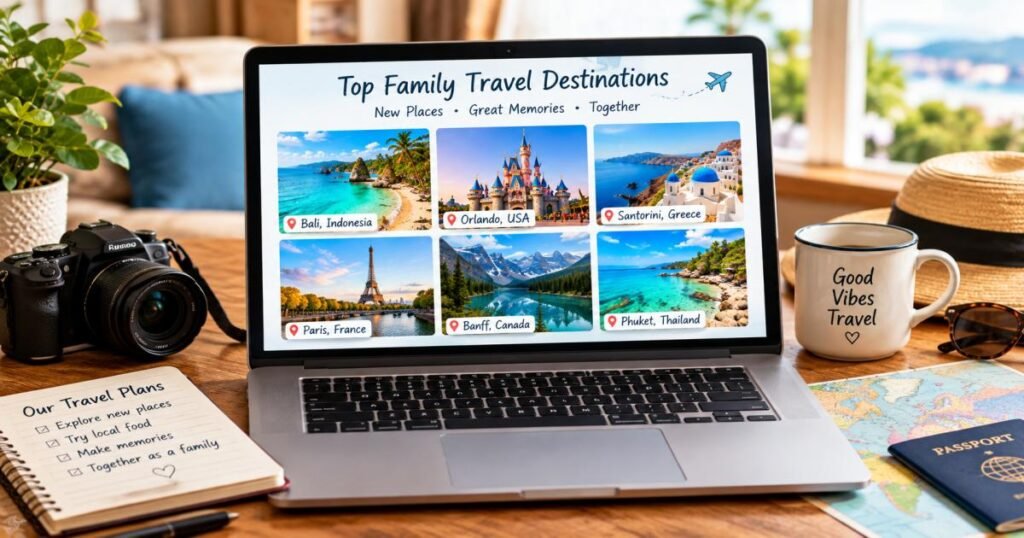
Family Travel Ideas for Different Types of Families
Every family is different. Here are ideas by stage.
Traveling With Babies
Keep it simple. Pick nearby places close to shops and medical care. Pack more diapers and feeding supplies than you think you need. Ask your airline about rules for infants, seats, and bassinets, and talk to your doctor before flying with a newborn. Slow travel with plenty of rest works best.
Traveling With Toddlers
Toddlers move fast and feel big. Keep travel days short. Bring snacks, small toys, and a few surprises. Choose places with room to run, like beaches, parks, and farms. Expect a meltdown or two, and stay calm. It is normal.
Traveling With Teenagers
Teens want a say. Let them plan part of the trip and pick one activity each. Give them some freedom where it is safe. Adventure, food, and photo spots usually go over well. So does good Wi-Fi.
Multigenerational Family Trips
Trips with grandparents, parents, and kids can be wonderful. They can also be tricky. Choose a place with easy access and activities for all ages. Agree on the budget and who pays for what before you leave. Plan quiet time so everyone can recharge.
Short Local Getaways vs. International Vacations
| Local Getaway | International Vacation | |
| Cost | Usually lower | Usually higher |
| Prep | Light | More: documents, health, money |
| Travel time | Short | Long |
| Time zones | None or few | Jet lag likely |
| Best for | First trips, young kids | Older kids, bigger plans |
On jet lag, a rough guide is about one day of adjustment per time zone crossed. Kids vary, so plan easy first days.
If you are new to family travel, start close to home. It builds confidence and shows you what your kids need.
How to Get the Most Value From My Little Babog
Use a family lifestyle blog like a toolkit. These habits help:
- Start with your trip type. Search for posts on road trips, beach breaks, or city stays.
- Use the checklists. Save or print them.
- Read the comments. Other parents often add smart tips.
- Try one idea at a time. You don’t need to change everything.
- Mix travel and home ideas. A new recipe or game can make your trip better.
- Share your own tips. Real families help each other most.
What Makes Family Travel Content Trustworthy?
The web is full of travel advice. Some of it is helpful. Some of it is out of date or copied. Use these five checks.
Look for First-Hand Experience
Good writers say what they did, saw, and felt. Look for details such as “the room was small, but staff brought a crib in ten minutes.” Vague praise is a warning sign.
Check Who Wrote the Article
A trustworthy blog tells you who is behind it. Look for an About page, a real name, and proof of experience.
Look for Specific Details and Real Examples
Real posts include prices, times, places, and honest problems. If every post says everything was perfect, be careful.
Distinguish Personal Opinions From Verifiable Facts
“Our kids loved the pool” is an opinion. “The museum closes on Mondays” is a fact you can check. Trust writers who show the difference.
Check Whether Travel Information Is Still Current
Prices, rules, and opening hours change. Look for the post date and for update notes. Before you book, confirm key details on the official website. This matters most for visas, health rules, and safety advice.
My Little Babog Family Lifestyle Travel Blog for a Worldwide Audience
Families around the world share one wish: good times together. That is why my little babog family lifestyle travel blog aims to help readers in the USA and everywhere else.
To serve readers across countries, the blog:
- Uses short, plain words that are easy to read and translate
- Reminds readers to check local rules, since they vary by country
- Shares ideas that fit many climates and cultures
- Respects different family shapes, budgets, and beliefs
School holidays also differ. The US has a long summer break, while other countries split breaks differently, so peak travel weeks vary. Check local school calendars when you plan, since prices and crowds follow them.
Practical Family Travel Checklist
Save this list for your next trip.
Before you go
- Check passports, IDs, and visas
- Book flights, stays, and transport
- Buy travel insurance
- Talk to your doctor if needed
- Tell your bank you will travel
- Make copies of key documents
Packing
- Clothes for the weather, plus spares
- Medicines and a first-aid kit
- Snacks and water bottles
- Chargers and a power bank
- Comfort items and small toys
- Diapers, wipes, and baby items if needed
On the way
- Keep documents in your carry-on
- Allow extra time
- Bring entertainment for kids
- Take breaks on long drives
At your stay
- Check the room for safety
- Find the nearest pharmacy and clinic
- Keep a few familiar routines
- Plan rest time each day
Final Thoughts
Family life moves fast, and trips can feel like one more task. Yet a little planning, a flexible mindset, and room to rest can turn travel into time that brings you closer.
That is the purpose of my little babog family lifestyle travel blog: simple, honest, family-first ideas that make travel and daily life feel lighter.
Start small. Pick one idea from this guide, try it on your next trip, and keep what works. Happy travels to you and your little ones.
FAQs
What is My Little Babog Family Lifestyle Travel Blog?
My little babog family lifestyle travel blog is a family blog that shares travel tips, parenting ideas, recipes, and fun activities. It helps parents plan easier trips and enjoy daily life with their children. It covers both vacations and everyday routines.
Who created My Little Babog?
[ADD: Your name and a one-sentence background. Example: “My Little Babog was created by [name], a parent of [number] who started writing after [event].”]
What topics does My Little Babog cover?
The blog covers four topics: family travel and holidays, parenting and family life, food and recipes, and fun activities and learning. Each topic supports the others. A trip guide may link to a snack recipe, and a parenting post may link to a packing list.
Is My Little Babog mainly a family travel blog?
Travel is a major part, but it is a lifestyle blog. It also covers home routines, meals, and activities. That mix helps families on the road and at home, and it is what separates it from a blog that lists only sights and hotels.
Is My Little Babog useful for parents traveling with children?
Yes. The advice starts with kids’ needs, such as nap times, flexible plans, and easy packing. Parents of babies, toddlers, and teens can all find ideas, and grandparents on multigenerational trips can use them too.
Does My Little Babog cover international travel?
[ADD: Confirm this against your real posts.] The planning steps in this guide work for local and international trips. For any trip abroad, check current passport, visa, and health rules on official government sites, since they change often.
What can families learn from My Little Babog?
Families can learn how to plan calmer trips, set a fair budget with a buffer, pack light, and build rest into each day. They also get simple food and activity ideas that make both travel days and home days smoother.
How can I use a family travel blog when planning a trip?
Use it for ideas, checklists, and real parent experience. Then confirm prices, opening hours, and rules on official websites before booking. Check the post date, since travel details change. Combine advice from more than one source for the best picture.






One Comment