

How to Blog Letsbuildup.org Start Writing on: Topics, Guidelines, and Publishing Tips
Searching for a Blog Letsbuildup.org Start Writing on? Here is the short answer. To write for the site, find its official contact or submission page and send a short pitch before you draft anything. That is the safest first move, because the site’s real process is not clear from public sources.
We checked. We found no public set of writer rules for LetsBuildUp.org, and the outside guides contradict each other. One says you must create an account first. Another says to fill out a contact form and ask the team to work with you. Neither claim comes from the site itself, so treat both as unconfirmed.
This guide helps you blog on Letsbuildup.org and start writing content without wasting time. You will see what the site seems to publish, which topics fit, how editors judge an article, how to pitch, what happens after you hit send, and which mistakes get posts turned down. Each step is marked as confirmed or as common practice that you should verify.
What is LetsBuildUp.org and What Type of Content Does It Cover?
LetsBuildUp.org is a blog-style website that appears to publish articles on family life, work, health, and personal growth. The evidence is indirect but consistent. A company blog links to its category page on parenting and work-life balance, and a survey-software site lists it as a source for a piece on patient satisfaction surveys.
Who runs it, and what is it for? That is where the sources split. Some pages call it a community platform. Pages that use the name “In Touch LetsBuildUp.org” describe a nonprofit network focused on education, mental health, and entrepreneurship. Others describe a blogging platform where anyone can sign up and publish. These three pictures cannot all be complete, and we did not find the site confirming any of them.
Here is a quick way to cut through the noise. Open the website letsbuildup.org and read the About page, if it has one. Then scan the ten newest posts and note the categories, the usual length, the tone, and whether each post shows an author name. Ten minutes of reading tells you more than any review. If a page claims the site is a nonprofit, look for a registered name you can check in a public charity database, since real nonprofits typically list one. You may also see the name written as #letsbuildup.org in social posts and searches, but use the plain domain when you look for official pages.
Blog LetsBuildUp.org Start Writing On: How to Get Started
How do you start? Follow these five steps. They hold up even if the site’s real process differs from what outside guides say.
- Read three recent posts. Note the length, headings, and tone.
- Look for a “Write for us,” “Contribute,” “Contact,” or “About” page. Check the top menu and the footer.
- Read every rule you find: word count, topic limits, link policy, and whether the site pays.
- Write a short pitch. Give a headline idea and two or three lines on what readers will learn.
- Send it through the official channel and wait for an answer before you draft the full piece.
Why pitch first? Time. Bloggers spend about three and a half hours on a typical post, according to Orbit Media’s annual survey, and a long guide takes more. A pitch takes ten minutes. If the editor says no, you lose almost nothing.
If the site does offer an account sign-up, as one guide says, use the real address and a unique password. And walk away from anyone who asks for money to get you published on the site. That is a red flag, whatever name they use.
What Topics Can You Write About for LetsBuildUp.org?
Which topics fit? Go by what the site already publishes. The visible categories lean toward everyday life and work. One outside guide describes the readers as families handling health and parenting, professionals who want career growth and better balance, and people working on personal growth. That points to five safe areas: parenting and family routines, work-life balance, productivity and career growth, health and wellness basics, and personal growth habits.
Pick an angle only you can offer. “Work-life balance tips” is a topic hundreds of blogs already cover. “How I stopped checking email after 7 p.m., and what my manager said” is specific and checkable. A real story builds trust faster than a list of general tips, and editors typically remember it.
Match your idea to a category the site already uses. If it fits nowhere, send a short note and ask first. Stay away from medical, legal, or money advice unless you have the training to give it, and name the expert who reviewed it.
LetsBuildUp.org Writing Guidelines: What Makes a Good Article?
We found no public style guide for the site. The habits below are what most editors expect, so they make a safe base. If LetsBuildUp.org publishes its own writing guidelines, follow those first.
Create Original and Helpful Content
Editors want original content that helps a reader do something. Do not copy, and do not paste raw AI text without a full rewrite. Add one detail only you know: a number from your own life, a mistake you made, a result you measured.
Before you write, ask one question. What will the reader be able to do after this? If you cannot answer in one sentence, narrow the topic. And never send the same draft to two sites at once. It is the fastest way to lose an editor’s trust.
Use Clear, Natural, and Reader-Friendly Language
Write the way you would explain the idea to a friend. Use short sentences, common words, and active voice. A Grade 9 reading level suits most adults and keeps the page easy to read on a phone.
Explain any special term the first time it appears. Cut warm-up lines and repeated points. Why be so strict? HubSpot data cited by Ahrefs says 73% of people skim blog posts, so every sentence has to earn its place.
Organize Content With Proper Headings
Use one title, H2 headings for main sections, and H3 headings for sub-points. Keep paragraphs to two to four sentences. Short blocks give skimmers a place to land and help readers stay to the end.
Put the answer to the main question near the top, then add detail below it. Use a list only when order or count matters, such as steps or a checklist.
Support Important Claims With Reliable Sources
Name or link the source for every number and strong claim. Government sites, universities, and major publishers beat anonymous blogs. If you cannot confirm a figure, soften the wording with “typically” or “on average,” or leave it out. Orbit Media’s survey found that 60% of bloggers include statistics in a typical post, which shows how common evidence has become.
Add a short author bio with your real background. Readers trust a writer more when they can see who is speaking and why that person knows the topic.
How to Research and Prepare Your First Blog Post
Good prep saves rewrites. Spend your first hour on research and an outline, not on polished sentences.
Understand the Main Search Intent
Search intent is the reason behind a search. Type your topic into Google and read the top results. Are people looking for steps, a definition, a list, or a review? Your article should match that need.
Check the “People also ask” box too. Those questions show what real readers want answered, and many make strong subheadings. For this guide, we built the FAQs around what a new writer would ask first: how to start, whether guest posts are accepted, and whether the site pays.
Build a Logical Article Outline
Write your title, five to seven H2 headings, and one line of notes under each. Then test the order. Does each section answer a question the last one raised? If not, move it.
Put the direct answer first and the background after it. Aim for the length the topic needs. Orbit Media’s 2025 survey put the average post at 1,333 words, with 64% of bloggers writing between 500 and 1,500 words and only 9% going past 2,000. A clear outline also makes your pitch easier, because you can paste the headings straight into the email.
Verify Facts Using Authoritative Sources
Check every number twice. Save the link and the date you saw it. Prefer primary sources, such as official reports, over blogs that repeat them. When two sources disagree, decide which one sits closer to the original.
We followed that rule while researching the site. We searched its name, opened the guides that ranked, and compared their steps. Several were near copies of each other, and two gave different first steps. That mismatch is why this article keeps returning to one piece of advice: confirm the process with the site. Copy an unchecked guide and you copy its mistakes.
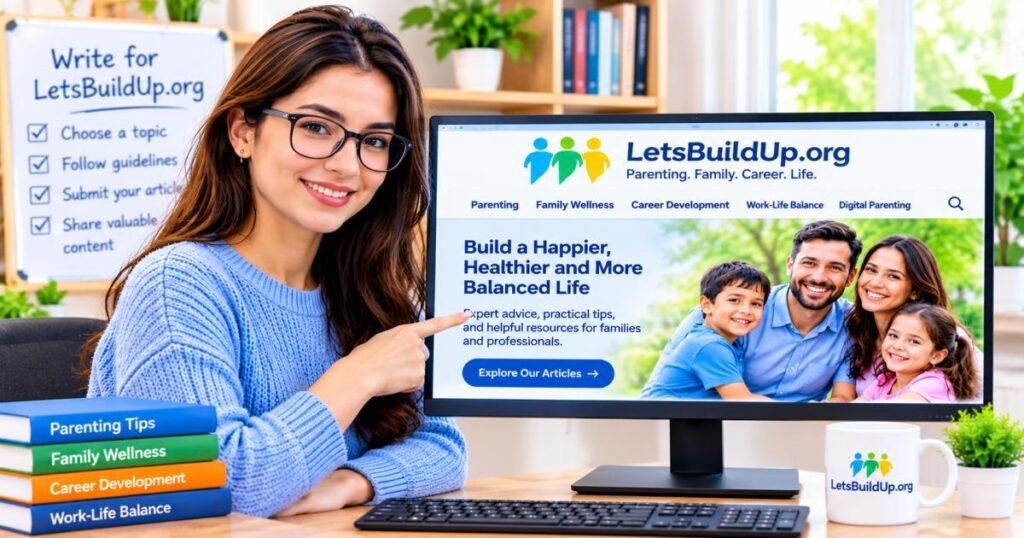
How to Submit an Article to LetsBuildUp.org
Submission comes down to two things: using the right channel and keeping your message short. Editors read many emails, and clear ones stand out.
Find the Official Contact or Submission Channel
Start on the site itself. Check the top menu, the footer, and the About or Contact page. Use a form or email address on the real domain.
Be careful with outside sites that claim to act as the go-between, and with strangers who message you offering “guaranteed” placement. If you cannot find any channel, use the general contact form and ask one plain question: how does your team accept new writers?
Prepare a Short Article Pitch
Keep the pitch under 200 words. Include your name, a one-line bio, a working headline, a two- or three-sentence summary, and why the idea fits the site. Add one or two links to published work if you have them.
A simple version might read: “Hello, I write about work-life balance. I would like to send you a 1,500-word article called ‘How I Set a Hard Stop to My Workday.’ It covers three habits I tested for six months and the results. Here are two samples of my work. May I send the full draft?”
Follow Up Professionally After Submission
Give the team at least a week before you follow up, since reply times typically vary. Send one polite reminder that repeats your headline and thanks them for their time. Then stop. Repeated emails hurt your chances.
If you hear nothing after the second try, move on and offer the idea to another blog. Tell any editor who is still reviewing your work that you plan to publish elsewhere.
What Happens After You Submit Your Article?
What happens next? We found no published review process for LetsBuildUp.org, so this is the usual path at most blogs. Ask the team to confirm each step.
Editorial Review and Content Evaluation
An editor checks whether the article fits the site, reads well, and adds something new. Many blogs also run a plagiarism check and look at your sources. Editorial review may take a few days or a few weeks, so use that time to write your next pitch.
Possible Revisions and Corrections
Editors often ask for changes to structure, tone, or sources. A typical note might ask you to cut a 300-word opening down to 100. Do it, and reply quickly. Keep a copy of every version, and fix factual errors first.
If a note is unclear, ask a question instead of guessing. Save your push-back for changes that would make the article less accurate, and let small style choices go.
Publication Approval and Author Attribution
Before the post goes live, confirm four things in writing: how your name and bio will appear (author attribution), whether you can add links, whether you can republish the piece later, and the publish date. If you plan to post letsbuildup.org content under your own byline, this step matters most. Clear answers now prevent surprises later.
Common Mistakes to Avoid When Writing for LetsBuildUp.org
Most rejections come from the same four errors. Avoid them and your pitch already beats many others.
Choosing Topics That Do Not Match the Website
A pitch for crypto trading tips sent to a parenting and work-life blog wastes everyone’s time. Read the categories first, then choose an idea that belongs there.
Ignoring Search Intent and Reader Questions
A draft built only around what you want to say loses readers. Check what people actually ask, then answer in order. Someone searching “how to write for letsbuildup.org” wants steps, not a history of blogging.
Using Unverified Information
Copying a claim from another blog spreads its errors. If you cannot find a reliable source, say what is unknown. In this guide, that meant saying plainly that pay, word count, and the sign-up process are unconfirmed.
Submitting Poorly Edited or Incomplete Content
Typos, missing sections, and placeholder links tell an editor you rushed. Read the draft out loud, run a spelling check, and finish every section before you send it.
Final Thoughts
The path is simple. Find the official channel, send a short pitch, and wait for a reply. Then prepare well: read the site, pick a topic that fits, write from real experience, and check every fact.
If you remember one thing, make it this. Outside guides do not agree on the sign-up steps, so confirm them with the site before you invest hours in a draft. That single check protects your time and your name. Send one small pitch this week and let the site’s own reply guide your next move.
FAQs
How can I start writing on LetsBuildUp.org?
Find the official contact or submission page on the site, read any rules, and send a short pitch before you write the full article. Outside guides mention an account sign-up or a contact form, but only the site can confirm which one it uses.
Does LetsBuildUp.org accept guest posts?
We found no public guest post policy. Some third-party pages say new writers can join, but the site has not confirmed it in the sources we checked. Ask through the official contact channel and keep the reply in writing.
What topics are suitable for LetsBuildUp.org?
Parenting, work-life balance, career growth, health and wellness basics, and personal growth look like the best fit, based on the categories other sites link to. Check the site’s current category list before you pitch.
Do I need previous writing experience to contribute?
Not necessarily, though the site has not published its rules. Most blogs care more about clear, original writing than a long resume. A strong sample, such as one post from your own blog, helps your pitch.
How long should an article be?
No official word count turned up. Orbit Media’s 2025 survey found the average blog post is about 1,333 words, and most bloggers write between 500 and 1,500. Ask the editor for a target, then match the length of recent posts on the site.
Does LetsBuildUp.org pay its contributors?
No public payment details turned up. Assume the work is unpaid unless the site says otherwise in writing, and never pay a fee to get published without clear terms.
Can I submit a search-optimized article?
Yes, if it helps readers first. Put the main phrase in the title and the first paragraph, use clear headings, and answer common questions directly. Do not stuff keywords, and skip promotional links unless the site allows them.




One Comment