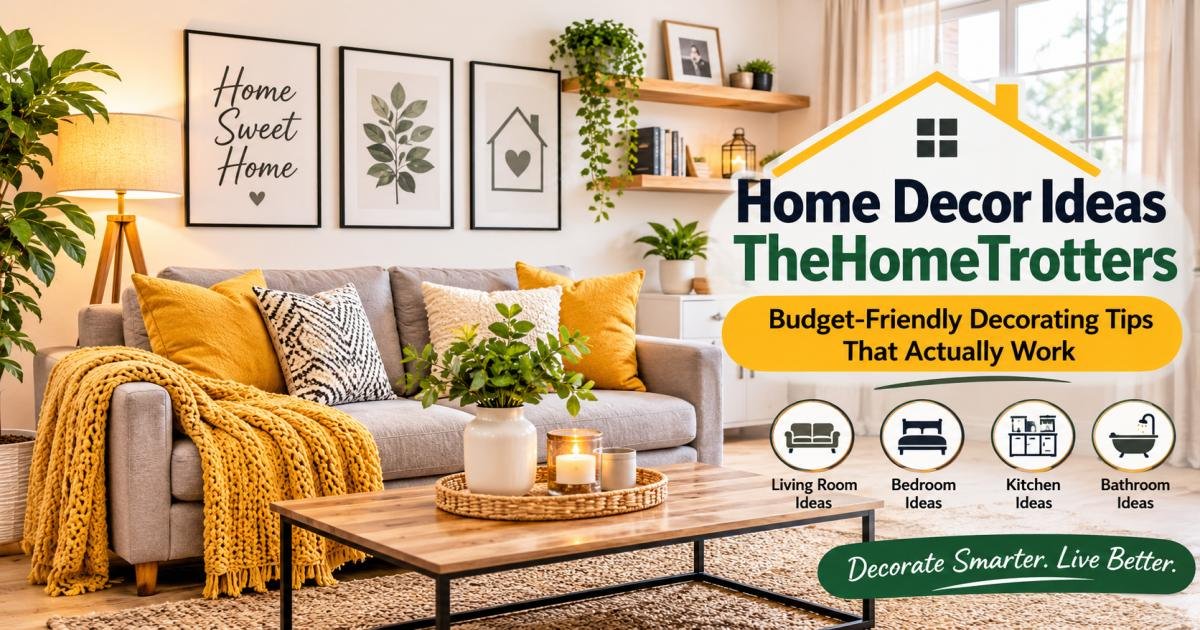
Home Decor Ideas TheHomeTrotters: Budget-Friendly Decorating Tips That Actually Work
Home decor ideas TheHomeTrotters is the phrase people search for when they want practical, low-cost decorating advice from the TheHomeTrotters home blog. The short answer: fix the light, fix the layout, then add paint, fabric, and a few secondhand finds. Those four moves typically cost far less than new furniture, and they change a room the most.
This guide turns that order of work into a plan for every room, with extra steps for renters and small spaces. You will find real measurements, figures from the U.S. Department of Energy and the Environmental Protection Agency, and clear limits on where to spend. Nothing here needs a contractor, and most projects fit into a weekend.
What Are Home Decor Ideas TheHomeTrotters?
In plain terms, home decor ideas thehometrotters points to the decorating tips published on thehometrotters.com, a home and lifestyle blog. Readers who search “thehometrotters .com home decor ideas” or “blog home ideas thehometrotters” usually want realistic ways to improve a room without a full renovation. Pages that describe the blog tend to stress comfort, daily function, and personal style over fast-moving trends.
Those pages also cover storage, small-space layouts, and changes that renters can undo. That mix suits budget home decor ideas well, because every purchase has to earn its place.
A few related searches need a quick note. Some readers type “mcnamara thehometrotters” hoping to find a named author or designer, but we could not confirm a contributor by that name from any independent source. Others search “contact thehometrotters .com” to reach the team. The safest route is the contact page on the site itself, not a third-party listing that shows an email address or phone number.
Because details about the people behind the blog are thin, this guide leans on advice you can check: published design guidelines, U.S. government figures, and tests you can run in your own home.
How to Decorate Your Home on a Budget
Decorating on a budget works best in a fixed order: set a number, pick one room, fix the biggest problem, then add small touches. Most summaries of the Hometrotters blog home ideas follow the same order. It matters because it blocks the biggest budget leak, which is buying pieces that do not belong together.
Set a total budget before you open a shopping app. One workable split is about half for the main piece in the room (a sofa, bed, or rug), a quarter for lighting and fabrics, and the rest for accents and a small reserve. Treat those shares as a starting point, not a rule.
Next, decide where quality earns its price. Items you touch or use daily deserve more of your money. Items that only sit on a shelf do not.
| Item | Spend or save | Why |
| Sofa or main seating | Spend more | Used daily, and weak frames often sag within a few years |
| Lighting and bulbs | Spend a little more | Good light changes how every other item looks |
| Paint | Spend a little more | Better paint usually covers in fewer coats |
| Wall art and frames | Save | Thrifted frames and printed photos look just as good |
| Pillows and throws | Save | Easy to swap when your taste changes |
| Vases and small accessories | Save | Secondhand shops are full of them |
Used furniture makes the “save” column easier. The Environmental Protection Agency counted about 12.1 million tons of discarded furniture and furnishings in the United States in 2018, and roughly 80 percent went to landfill. With that much supply, solid secondhand pieces turn up often, typically for much less than retail.
Budget-Friendly Living Room Decorating Ideas
Where should you start in a living room? Start with measurements, not shopping. Designers typically leave 30 to 36 inches for main walkways and about 16 to 18 inches between the sofa and the coffee table. Try those numbers first, because moving furniture costs nothing.
Pull the sofa a few inches off the wall, face seats toward one another, and keep a clear path through the room. A new arrangement often changes the feel more than a new purchase does.
Next, fix the floor and the windows. A rug should be large enough that at least the front legs of every seat rest on it, which usually means an 8-by-10 or 9-by-12 rug. In a smaller room, leave about 12 to 18 inches of bare floor between the rug and the walls.
Curtains work the same way on the walls. Mount the rod 4 to 6 inches above the window frame and let it extend 3 to 6 inches past each side. The window looks larger, and the ceiling looks taller.
Finish with layers: two or three pillows in a repeated color, one throw, a lamp, and one large piece of art instead of five small ones. Above a sofa, leave about 6 to 8 inches between the furniture and the bottom of the frame so the two read as a pair.
Affordable Bedroom Decor Ideas for a Cozy Retreat
What makes a bedroom feel cozy? Calm colors, soft textures, and warm light. Bedding does most of the work. Pick a duvet cover in one or two quiet colors, then add texture with a knit throw or a linen-style pillow cover. Swapping covers typically costs far less than replacing the whole set.
Lay a rug under the lower two-thirds of the bed so your feet land on something soft in the morning. Trade the harsh ceiling light for a pair of small bedside lamps with warm bulbs, and keep nightstand tops simple: a lamp, a book, and maybe a small plant.
For a headboard look without buying one, paint a wide band of color behind the bed or hang a long framed print above it. Under-bed storage boxes hide the clutter that makes a bedroom feel busy.
Cheap Kitchen Decorating Ideas That Make a Difference
Kitchens are expensive to renovate but cheap to refresh. New cabinet knobs and pulls typically cost a few dollars each, yet they change the look of the whole room. Clear the counters down to what you use daily, and group those items on a tray so they look arranged instead of scattered.
Then add small, useful upgrades. A washable runner adds color and softens a hard floor. Peel-and-stick tile can cover a stained backsplash, and plug-in LED strips under the cabinets add task light without wiring.
A few herbs on the windowsill add color and scent, and you can cook with them. Skip fake fruit and busy themes. Most cheap home decor ideas for kitchens work best when they stay useful and easy to undo.
Small Bathroom Decorating Ideas on a Tight Budget
How do you decorate a small bathroom without remodeling? Start with the basics and keep the list short. A matching towel set in one color looks tidy even in a tight space. Replace a worn shower curtain with a plain white or light fabric one, and hang the rod high and wide so the ceiling looks taller.
Add one wall shelf or a row of hooks to clear the counter, and keep daily items in a few matching jars or a small tray. A framed mirror in place of a plain builder-grade one adds character for little money.
Because bathrooms hold moisture, choose paint made for damp rooms, run the exhaust fan during and after showers, and avoid unsealed raw wood, which can warp.
DIY Home Decor Projects That Save Money
DIY home decor projects pay off most when they have a high look-to-cost ratio. Paint leads the list. A gallon typically covers about 350 to 400 square feet, so an accent wall often costs less than a single framed print.
Other low-cost projects include a gallery wall built from thrifted frames sprayed one color, wooden crates stacked as shelves, a plain mirror framed with inexpensive trim, and candle holders made from glass jars. Thrifted decor suits these projects because a frame or crate only needs a clean surface and a coat of paint. Given how much furniture gets discarded each year, frames, crates, and side tables are easy to find secondhand.
Finish one project before you start the next. Prep matters more than skill: clean the surface, tape the edges, and test paint or stain on a hidden spot first. Beginners usually get better results from small, forgiving projects than from a big furniture overhaul.
Smart Color and Lighting Choices for Affordable Interiors
Color and light cost little and change a room the most. Start with light, because it affects how every other item looks.
Lighting works best in three layers: overhead light, task light for reading or cooking, and accent lighting for mood, such as a small lamp on a shelf. A bulb swap is the cheapest fix. The U.S. Department of Energy says LED bulbs use at least 75 percent less energy than incandescent bulbs and last up to 25 times longer. It also puts lighting at around 15 percent of an average home’s electricity use and estimates a household can save about $225 a year by switching fully to LEDs.
Choose bulbs by lumens, not watts. A 60-watt incandescent bulb gives roughly 800 lumens, so look for an LED labeled about 800 lumens. Pick soft white (about 2700K to 3000K) for living rooms and bedrooms, and a brighter white for kitchens and bathrooms.
Smart bulbs and plugs, the kind of gadgets some readers look for under “tech thehometrotters .com,” can dim and schedule lamps for a modest price. Plain warm LEDs still deliver most of the benefit.
For color, the 60-30-10 color rule gives you an easy start. Use about 60 percent main color (walls and large furniture), 30 percent a second color (curtains, rug, a chair), and 10 percent an accent (pillows, art). Pick a main color you can live with for years, and keep bolder choices in the 10 percent.
Test paint samples on the wall and check them in morning and evening light. Low-VOC paints are widely sold now. Outside write-ups that mention “coolideas thehometrotters com” also list them among eco-friendly upgrades, though we could not confirm what that page itself contains.
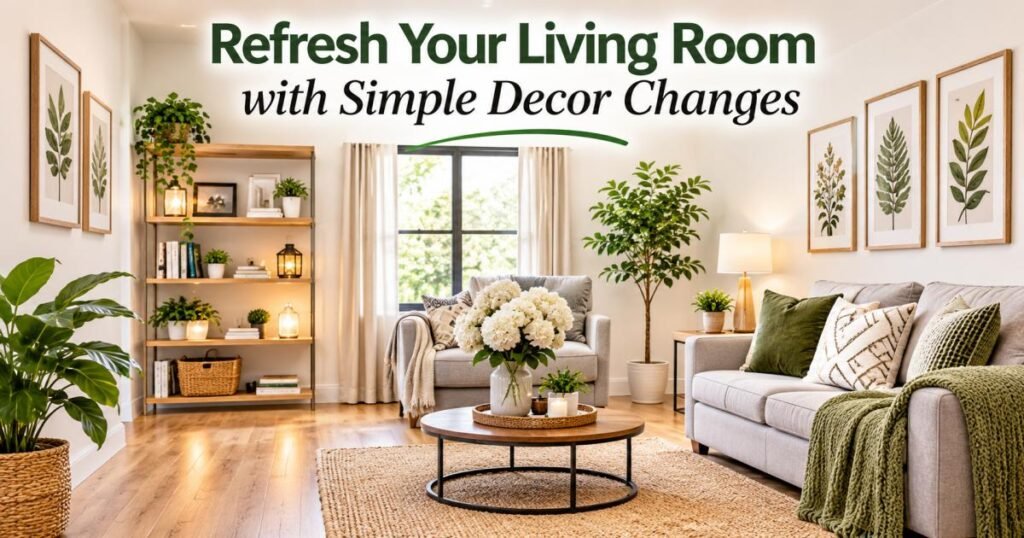
Affordable Home Decor Ideas for Small Spaces
Small space decorating ideas share one rule: fewer, better-chosen things. These five habits keep a compact home useful without making it feel crowded.
Choose Multifunctional Furniture
Multifunctional furniture does two jobs in one footprint. A storage ottoman, a bed with drawers, or a console table that doubles as a desk can each replace a second piece. Check measurements and weight limits first, and browse secondhand listings before buying new, since solid pieces like these often turn up used.
Maximize Vertical Wall Space
When floor space runs out, use the wall. Tall bookcases, wall shelves, and a hook rail by the door free the floor. Keep heavier items on lower shelves, and use anchors rated for your wall type.
Use Mirrors to Create a Spacious Feel
A large mirror beside or across from a window pushes daylight deeper into the room, which makes the space look wider. A full-length mirror leaned against the wall works without drilling. An old frame can be repainted to match the room.
Keep Furniture Proportional to Room Size
An oversized sofa can swallow a small room. Measure the space, then mark each piece’s footprint on the floor with painter’s tape before you buy. Designers typically allow 30 to 36 inches for main walkways, so aim for at least 30 inches (about 76 cm).
Make the Most of Unused Corners
Corners can hold a floor lamp, a tall plant, a narrow shelf, or a reading chair with a small basket for throws. One purposeful item per corner is enough. Filling every corner brings the clutter back.
Renter-Friendly Home Decor Ideas That Actually Work
Can renters decorate without losing a deposit? Yes, if the changes are reversible. Renter-friendly home decor starts with your lease, then relies on the five ideas below.
Use Removable Wallpaper and Wall Decals
Peel-and-stick wallpaper suits one accent wall or the back of a bookcase. Test a small hidden patch first, because some adhesives can lift paint, especially on flat or newly painted walls. When you remove it, peel slowly at a low angle.
Decorate With Freestanding Shelves
Ladder shelves, freestanding bookcases, and rolling carts hold decor without a single hole. Tall units can tip, so ask your landlord about securing them if children live in the home.
Choose Temporary Lighting Solutions
Floor lamps, clip-on lights, plug-in wall sconces, and stick-on LED strips add light without wiring. If the landlord’s fixture throws harsh light, swap in warmer LED bulbs and keep the originals to put back at move-out. LEDs also cost little to run, since they use at least 75 percent less energy than incandescent bulbs.
Personalize Your Space Without Permanent Changes
Rugs, curtains on tension rods, pillows, plants, and framed photos on a leaning ledge give a rental personality fast. If you replace cabinet hardware, store the originals in a labeled bag so you can reinstall them when you leave. Ask for written permission before you paint.
Protect Your Security Deposit While Decorating
Take dated photos on move-in day, including any existing nail holes and scuffs. In many U.S. states, a few small nail holes count as normal wear and tear.
Large holes, wall anchors, and damaged paint can lead to deductions from your security deposit. Rules differ by state and by lease, so check both. Some landlords also ban adhesive hooks because they can strip paint, so when in doubt, ask in writing and keep the reply.
How to Make Your Home Look Expensive Without Spending More
A home looks expensive when it looks cared for and consistent, not when every item carries a high price. What makes a room look expensive on a budget? Five habits do most of the work.
Limit your palette to three or four related colors so the eye reads one calm scene. Clear surfaces and leave some space, because crowding is what makes a room look cheap.
Upgrade the details people notice up close: cabinet hardware, switch plates, curtain rods, and bulbs. Choose real texture, such as wood, linen, wool, and ceramic, over glossy plastic.
Finally, hang art at eye level. Galleries and museums typically set the center of a piece 57 inches from the floor, which matches average eye level, and many people hang art higher than that. Light it with a warm bulb. Matching LED bulbs in the same warm tone across a room cost little, last up to 25 times longer than incandescent bulbs, and make the lighting look planned.
Common Budget Decorating Mistakes to Avoid
Most overspending comes from five repeat errors. Each one has a simple fix.
Buying Decorative Items Without a Plan
Impulse buys pile up fast. Before you shop, write down what the room needs and which colors it uses, and keep a photo and a paint swatch on your phone. If an item is not on the list, wait 48 hours before you buy it.
Ignoring Furniture Scale and Room Layout
A lovely sofa that does not fit the room or the doorway is wasted money. Measure the room, the doors, and the stairwell, and sketch a quick layout first. A sofa that leaves less than 30 inches of walkway will make the room feel cramped, however nice it looks.
Following Trends Without Considering Personal Style
Trend pieces date quickly. Put trends into cheap, swappable items like pillow covers or a vase, and keep large pieces neutral so they last through several looks. A neutral sofa can follow a trend through its pillow covers instead of a full replacement.
Overspending on Unnecessary Accessories
Ten small objects look busier than three larger ones. Fewer, bigger accessories also mean less dusting and less money spent. Group items in odd numbers, such as three, and leave gaps between groups.
Choosing Cheap Materials That Do Not Last
The lowest price can cost more over time. Thin particleboard can swell when wet, cheap curtains can fade fast, and very cheap bulbs often flicker. Secondhand solid wood usually beats new flimsy furniture, and the Environmental Protection Agency’s discard figures suggest plenty of it is out there. Check the joints, drawers, and any upholstery smell before you pay.
How to Plan a Budget-Friendly Home Makeover Step by Step
A budget home makeover needs a plan, or it becomes a string of small, unrelated purchases. The Home Trotters also put planning and budgeting first. Follow these five steps in order.
Evaluate Your Current Living Space
Walk through your home with your phone camera. Photos show clutter and layout problems you have stopped noticing. Note what works and should stay, and what bothers you, such as a dark corner or a bare wall.
Choose One Room to Improve First
Pick the room you use most, or the one that bothers you most. Finishing one room first gives you a style reference for the rest of the home. It also avoids a house full of half-done spaces.
Create a Shopping and DIY Checklist
List each item with a spending cap and sort it into buy, DIY, or already own. Shop your own home first, since moving a lamp or chair from another room is free. A short list also keeps cheap home decor ideas from turning into clutter.
Compare Prices Before Purchasing
For big items, check at least three sources: thrift stores, local resale listings, and a regular retailer’s sale. Add delivery costs to the total before you decide. Secondhand pieces often win on price, but check condition and measurements first.
Review Your Results and Adjust Your Budget
Live with the finished room for about two weeks. Note what still bothers you, spend leftover money there, and carry any remaining budget into the next room.
Final Thoughts
Budget decorating works best when it is a little boring: measure first, plan the room, finish one space at a time, and buy fewer things that matter more. Fix the light, tap the secondhand supply, and spend where you sit, sleep, and read.
Home decor ideas thehometrotters, as described across the blog and in pages about thehometrotters blog home ideas, follows the same logic: practical changes, personal touches, and no pressure to buy everything at once.
Pick one room this week, write a spending cap on a notepad, and make the first change. For the original thehometrotters .com home decor ideas, visit the site directly. To reach the team, use the contact page there, not a third-party “contact thehometrotters .com” listing.
FAQs
How Can I Decorate My Home With Very Little Money?
Start with what you already own: rearrange furniture, declutter, and move decor between rooms. Then add one low-cost change at a time, such as a coat of paint, warm LED bulbs, new cabinet hardware, or thrifted frames. Layout changes and decluttering typically give the biggest return per dollar.
What Are the Cheapest Ways to Make a Home Look Better?
Clean and declutter first, because mess makes any room look cheaper. Then swap harsh bulbs for warm LEDs, wash the windows, hang curtains 4 to 6 inches above the window frame, and add one plant. These steps cost little and show results right away.
How Can I Make My Living Room Look Expensive on a Budget?
Use a limited color palette, a rug large enough for the front legs of every seat, curtains hung high, and layered lighting. Keep the coffee table simple, with a tray, a book, and a plant. Keep large pieces neutral and put bold color in cheap items you can swap.
What Home Decor Items Are Worth Spending Money On?
Spend on pieces you use daily and that wear out first: a sofa, a good rug, and quality lamps and bulbs. LEDs repay their price, since the Department of Energy says they use at least 75 percent less energy and last up to 25 times longer than incandescent bulbs. Save on pillows, vases, and frames.
How Can I Decorate a Small Apartment Without Clutter?
Choose furniture with built-in storage, use wall space, and keep each surface to a few items. Set up one drop zone near the door for keys and mail, and leave at least 30 inches for walkways. If an item has no home, it probably does not belong in the room.
What Are the Best DIY Home Decor Ideas for Beginners?
Start with forgiving projects: painting an accent wall or one piece of furniture, building a gallery wall from thrifted frames, or swapping cabinet hardware. Test on a hidden spot first and watch a tutorial all the way through before you begin.
How Often Should I Update My Home Decor?
There is no fixed schedule. Small seasonal swaps, such as pillow covers, a throw, or fresh flowers, keep a room fresh every few months. Save bigger changes for when your needs change, like a move, a new baby, or a new job. If you feel bored but the room still works, change accessories, not furniture.