Blog Home Ideas TheHomeTrotters: Practical Inspiration for Every Room
Blog home ideas: TheHomeTrotters are practical, room-by-room ideas that help a home look better and work better without a big budget or a major renovation. They cover decorating, storage, small DIY jobs, and upgrades you can finish in a weekend.
The name TheHomeTrotters appears on several home-idea pages, and it isn’t always clear who runs them. So this guide doesn’t depend on any one site. Every tip below rests on standard design guidelines, ergonomics advice, or a simple test you can run in your own space. Take what fits your home and skip the rest.
What Makes TheHomeTrotters Blog Home Ideas Worth Exploring?
Blog home ideas thehometrotters in this style tend to share three habits. They put comfort ahead of trends, they sort advice by room, and they pair decorating with storage and daily use. That mix matters because a room that looks great but is hard to live in rarely stays that way.
Ideas like these also lean toward realistic budgets: paint, lighting, textiles, and secondhand finds rather than gut renovations. Think of a home blog as a menu, not a recipe. Pick two or three ideas that solve a real problem in your home, and leave the rest.
How to Plan a Beautiful and Functional Home
Start with how you use each room, not how you want it to look. Spend one ordinary day noticing where you drop your keys, where you sit, where you trip over things, and where you wish you had a shelf. Write down the top three problems in each room.
Then pick one room to finish first. Set a firm budget and add about 10% for surprises. Mark furniture footprints on the floor with painter’s tape before you buy anything, and measure doorways and stairs if you’re ordering large pieces.
Choose a simple palette. The 60-30-10 rule is a handy guide: about 60% of the room in a main color, 30% in a second color, and 10% in an accent. A blog home page template works on the same principle. It offers visitors a few clear paths and hides the rest. Your plan needs the same restraint, with one main goal for each room.
Living Room Ideas to Create a Welcoming Space
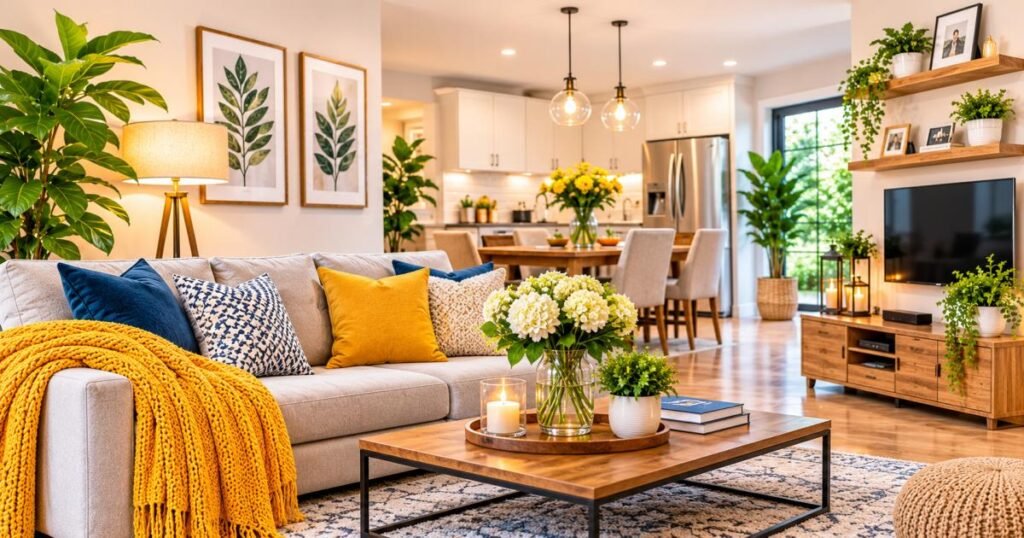
Arrange seating so people can talk without raising their voices. Pulling the sofa a few inches off the wall and angling a chair toward it usually works better than lining everything up against the walls.
Size your rug so at least the front legs of the sofa and chairs sit on it. In a typical seating area, that often means an 8-by-10-foot rug. A coffee table sits comfortably 14 to 18 inches from the sofa, close enough to reach and far enough to walk past.
Light the room from three levels: an overhead fixture, a floor lamp, and a table lamp. Warm white bulbs, often labeled 2700K to 3000K, give a cozy feel. Hang curtains close to the ceiling and wide of the window frame so the window looks larger. Finish with texture, such as a wool throw, linen pillow covers, or a woven basket, rather than more objects.
Bedroom Decorating Ideas for Comfort and Relaxation
A bedroom works best when it feels calm and stays quiet. Pick a soft palette, such as warm white, sage, clay, or muted blue, and layer bedding in two or three textures. Lined or blackout curtains help with early light and street glare.
Place a lamp within arm’s reach on each side of the bed, and use warm bulbs at 2700K or lower in the evening. Leave about two feet of clear floor on each side of the bed so you can move without squeezing past furniture. A rug that extends beyond the bed’s sides gives your feet something soft to land on.
Keep nightstands simple: a lamp, a book, a glass of water. Move chargers and work items out of sight if you can. A room with fewer reminders of work is easier to wind down in.
Kitchen Ideas That Combine Style and Practicality
Kitchens reward planning more than decoration. The National Kitchen and Bath Association suggests that the three distances between the sink, cooktop, and refrigerator add up to no more than 26 feet, with each leg between 4 and 9 feet. It also recommends a work aisle of at least 42 inches for one cook. Measure your own kitchen against those numbers. If one leg is far too long, a rolling cart or a small prep table near the stove can shorten the trips.
Keep daily items within arm’s reach and store rarely used gear up high or in a low cabinet. Pull-out organizers and drawer dividers cost little and save time.
For style, change what you see and touch most. New cabinet pulls, a fresh coat of paint on the doors, under-cabinet lighting, and a peel-and-stick backsplash can transform a dated kitchen for a modest cost. Renters can use the peel-and-stick option and keep the old pulls to put back at move-out.
Bathroom Ideas for a Clean and Relaxing Atmosphere
A clean bathroom starts with air and storage. Run the exhaust fan during every shower and for about 20 minutes afterward, a common recommendation that helps limit mildew. Re-caulk any cracked or darkened seams around the tub and sink before you decorate.
Then simplify. Use wall shelves or an over-the-toilet unit for extras, and hang towels on hooks. Hooks are easy to use, and a spread-out towel dries faster than a folded one.
Stick to a quiet palette of white, stone, or soft green with natural touches such as a wooden stool or a woven basket. A low-light plant adds life where windows are small. If you can, put lights on both sides of the mirror, because side lighting softens shadows on your face better than a single fixture above.
Home Office Ideas for Productivity and Comfort
Comfort comes first, because a desk you can’t sit at for two hours won’t help your focus. Set the monitor about an arm’s length away, with the top of the screen at or slightly below eye level. Choose a chair that supports your lower back, and keep your feet flat on the floor.
Place the desk so the window is to the side, not behind or in front of the screen, which cuts glare. Add a desk lamp for evening work, and use a cable tray or sleeves to hide cords.
In a small home, a corner shelf, a fold-down wall desk, or a slim console can serve as a workspace and disappear when you’re done. Add one personal item, such as a framed print or a plant, so the space feels like yours.
Entryway and Hallway Ideas to Improve Your Home’s First Impression
The entryway is where clutter starts, so give it a system. A row of hooks at two heights, a bench with shoe storage, and a small tray for keys cover most needs. A mirror adds light and makes a narrow space feel wider. A washable rug catches dirt before it travels inside.
In hallways, a runner and steady lighting make the space feel finished. When you hang art, aim for the center of each piece at about 57 inches from the floor, a height often used in galleries. Try to keep the walking path at least 36 inches wide, so two people can pass without turning sideways.
Outdoor and Patio Ideas to Extend Your Living Space
Treat a patio or balcony like a room. Define it with an outdoor rug, then arrange seating around a view or a conversation instead of facing a wall. Choose weather-resistant cushions and furniture, and keep a storage bench nearby so cushions stay dry.
String lights or solar lanterns make the space useful after dark. Potted herbs and tall planters add privacy and scent, and a shade sail or umbrella makes midday seating bearable. If you’re adding a fire pit, check local rules and keep it well away from the house, fences, and overhanging branches.
Design writers have noted that outdoor areas are increasingly styled as real extensions of the home in 2026. That means even a small balcony with a chair, a plant, and a lamp counts.
Budget-Friendly Home Improvement Ideas That Make a Difference
The biggest changes per dollar are usually simple ones. Declutter and rearrange first, since both are free. Next come bulbs and lamps, cabinet hardware, pillow covers, and a throw, which often cost under $50 each. After that, paint, a good rug, and curtains deliver the most visible change.
Secondhand shopping stretches a budget further. Thrift stores, online marketplaces, and estate sales often have solid wood furniture that is better built than new pieces at the same price, and designers say vintage items suit current taste anyway. Spend your money on what you touch or use daily, such as sofa cushions, a mattress, and good lighting. Save on trays, vases, and wall art.
Smart Home Ideas for a Safer and More Convenient Lifestyle
Start with small devices that solve a real annoyance: smart plugs for lamps, a video doorbell, a smart lock, or a programmable thermostat that eases off heating and cooling while you’re out. Add devices slowly, because each one needs setup and updates.
Security habits matter as much as the hardware. Use a strong, unique Wi-Fi password, turn on two-factor sign-in for every device account, and install updates when they appear. Keep indoor cameras out of bedrooms and bathrooms, and tell guests when cameras are running.
Pet owners have extra things to think about. Ring’s blog published a pet-focused security guide in May 2023, noting that its alarm motion detector can be set to ignore pets under 30 or 50 pounds, so a roaming dog doesn’t set it off. A Ring-commissioned survey of 1,003 US dog and cat owners that April found 38% check on their pets through an indoor camera. Surveys from a manufacturer deserve some caution, but the habit is common, and pet-friendly settings are worth looking for whichever brand you choose.
Home Organization and Maintenance Tips for Everyday Living
Organizing starts with removing things. Keep what you use, store what you need seasonally, and donate the rest. Give every item a home near where you use it, make use of vertical space with wall shelves and over-door hooks, and try a one-in, one-out rule for clothes and kitchen gadgets. Buy containers only after you’ve sorted, so you get the right sizes.
Most blog home care advice sounds dull because it works: small jobs done on a schedule. A simple routine looks like this:
- Test smoke and carbon monoxide alarms monthly.
- Replace or clean HVAC filters every one to three months, depending on the filter type.
- Clear the dryer lint trap after every load, and have the vent cleaned yearly.
- Check caulk, grout, and under-sink pipes for moisture twice a year.
- Clear gutters in spring and fall if trees grow nearby.
Home Decorating Trends and Timeless Design Ideas
Design coverage from magazines such as Homes & Gardens and Ideal Home points to warmth in 2026: earthy neutrals, textured walls like limewash and wood paneling, natural materials, layered lighting, and mixes of vintage and new. The common thread is a lived-in home that reflects the people in it, rather than a showroom look.
Timeless ideas change slowly. Good proportions, natural materials like wood, linen, wool, and stone, a limited palette, and layered lighting look right in any decade. A smart approach is to buy big pieces, such as the sofa, bed, and dining table, in classic shapes and neutral colors. Bring in trends through items that are easy to swap, such as pillow covers, art, a vase, or a lampshade. If a trend fades, you replace a $20 item instead of a $2,000 one.
Common Home Decorating Mistakes and How to Avoid Them
Most decorating regrets come from a handful of repeat errors.
Buying before measuring is the most common. Tape the footprint on the floor and check doorways first.
A rug that is too small makes a room look chopped up, so size up.
A single overhead light makes a room feel flat. Add lamps at different heights.
Art hung too high floats away from the furniture. Use the 57-inch center line as a starting point.
Following every trend leads to a home that dates quickly. Choose one or two that you truly like.
Skipping storage lets clutter undo your styling, so declutter before you decorate.
Matching everything makes a room look like a catalog page. Mix woods, metals, and textures a little so the space feels collected.
How to Apply TheHomeTrotters Blog Home Ideas to Your Own Home
Open the blog home page of any home-ideas site you like and look at how it sorts content. Many blog home pages for decor sites group ideas by room, by budget, or by style, and blog home page examples from design sites often follow the same pattern. Borrow that structure for your own plan.
Write your rooms down in order of how much they bother you. Pick one, choose three ideas from this guide that solve its biggest problems, and set a weekend to finish them. Take a before photo so you can see the progress. Then live with the room for two weeks before you buy anything else. That pause saves more money than any sale.
Final Thoughts
A home that reflects your lifestyle is built one solved problem at a time. Begin with the room you use most, fix its biggest annoyance, and let each small win guide the next. Ideas from any blog work best when you test them against how you actually live. Measure first, spend where you touch, and keep what makes you feel at ease.
FAQs
What Are the Best Blog Home Ideas TheHomeTrotters for Beginners?
The best blog home ideas TheHomeTrotters readers can start with are the cheap, low-risk ones: declutter, rearrange furniture, swap in warm white bulbs, and add a rug or throw. These cost little, show results fast, and teach you what you like before you commit to paint or bigger purchases.
How Can I Improve My Home Without Spending Too Much Money?
Focus on paint, lighting, hardware, and secondhand furniture. Fix the things you use daily first, such as seating comfort and storage. Spend on items you touch every day, and save on accessories. Waiting two weeks before each purchase also helps, because it filters out impulse buys.
What Are the Best Decorating Ideas for Small Homes?
Use light colors, mirrors, and furniture that does double duty, such as a storage ottoman or a drop-leaf table. Go vertical with wall shelves and tall bookcases, keep some floor visible, and stick to one tight palette so the space reads as one calm room instead of many small ones.
How Can I Make My Living Room Look More Modern?
Choose fewer, larger pieces with simple lines, clear the surfaces, and keep the palette neutral with one accent color. Add one or two textures, such as boucle or wool, hide cables, and use layered lighting with warm bulbs. A modern look comes mostly from restraint.
What Are the Easiest DIY Home Improvement Projects?
Painting, swapping cabinet hardware, adding peel-and-stick backsplash tiles, hanging shelves, and installing hooks are friendly starting points. Use a stud finder for shelves, and turn off the breaker before touching any light fixture, or hire an electrician for anything beyond a simple swap.
How Can I Make My Home More Functional and Comfortable?
Fix daily friction first: put storage where items get used, add lamps at several heights, keep walkways clear, and soften hard surfaces with textiles. Good airflow and a comfortable temperature matter as much as the decor.
What Are Some Practical Home Organization Ideas?
Sort by zone, keep only what you use, store items where you use them, and use vertical space. Clear containers and labels help the whole household follow the system. A ten-minute reset each week keeps clutter from piling up again.