
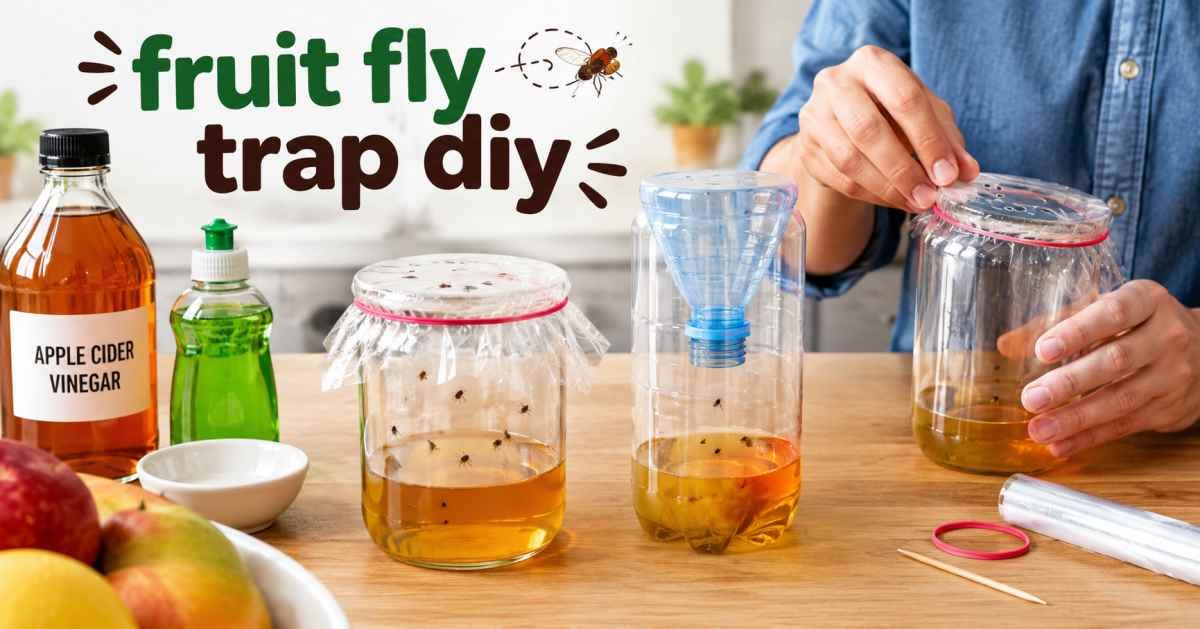
Fruit Fly Trap DIY Easy Ideas That Really Work
Fruit flies show up out of nowhere and multiply fast, and after I dealt with a bad batch in my own kitchen last summer, I understood why so many people search for a DIY fruit fly trap instead of running to the store.
A simple homemade setup, using things already sitting in a kitchen cabinet, can clear out a swarm within a couple of days. Below is a complete, no-fluff guide covering what brings fruit flies into a home, which traps work, and how to keep the problem from coming back.
What Causes Fruit Flies in Your Home
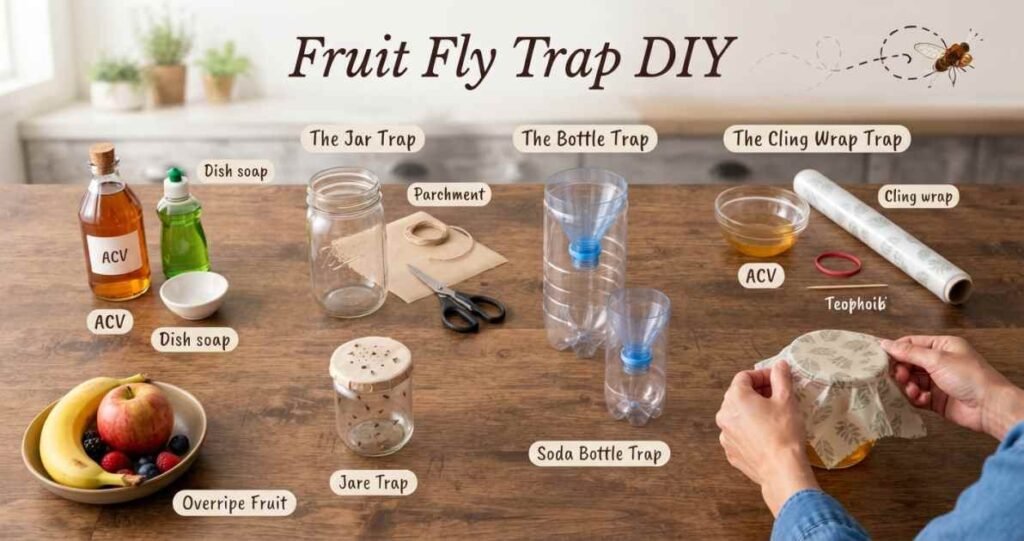
Before building any trap, it helps to know what actually draws these bugs indoors in the first place. Fruit flies are not picky. They lay eggs in anything moist and slightly fermented, and a kitchen offers plenty of that.
Common sources include:
- Overripe bananas, peaches, tomatoes, or berries left out on a counter
- Empty wine, beer, or juice bottles with a little liquid stuck at the bottom
- A kitchen drain with a buildup of food residue
- An overflowing compost bin or trash can
- Damp sponges or dish rags left in the sink overnight
- Recycling bins that have not been rinsed
A single female fruit fly can lay around 500 eggs in her short lifespan, and eggs can hatch within a day in warm weather. That is why a small problem on Monday can turn into a full-blown swarm by the weekend. Finding and removing the breeding source matters just as much as trapping the adults; a new generation keeps hatching while the trap only catches the visible flies.
The Apple Cider Vinegar and Dish Soap Trap
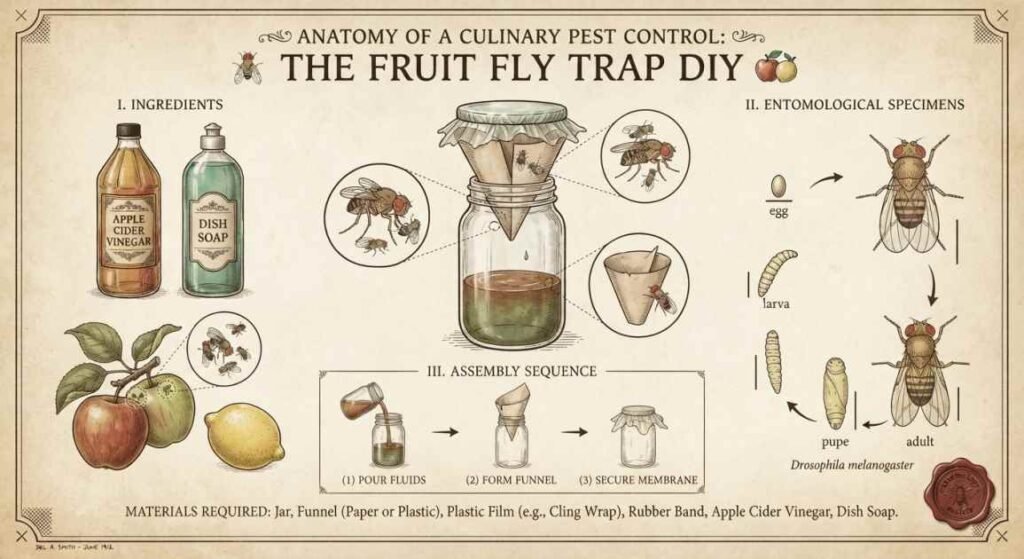
This is the most searched and most recommended fruit fly trap diy method, and for good reason. The fermented smell of apple cider vinegar mimics rotting fruit, which pulls fruit flies straight toward it.
What You Need
- A small jar or bowl
- 1/4 cup apple cider vinegar
- 2 to 3 drops of dish soap
- Plastic wrap and a rubber band (optional)
How to Make It
- Transfer the apple cider vinegar into the container.
- Incorporate several drops of dish detergent and mix softly. Avoid making bubbles.
- If using plastic wrap, cover the top tightly and poke five or six small holes with a toothpick.
- Place the jar near the fruit bowl, sink, or trash can, wherever the flies gather most.
- Check it every 24 hours and refresh the mixture once it looks full or the smell fades.
The dish soap is doing the real work here. It breaks the vinegar’s surface tension, so instead of landing safely, the fly sinks and cannot fly back out. I keep a jar of this near my kitchen window every summer, and it usually fills up within a day.
Prefer using white vinegar instead? A DIY fruit fly trap using white vinegar works almost the same way, though most people report that apple cider vinegar performs slightly better because of its stronger fermented scent. White vinegar is a fine backup if apple cider vinegar is not available in the pantry, and it still gets results, just a bit slower in most cases.
The Paper Cone Funnel Trap
This method is the classic setup many people remember seeing in an old magazine or a parent’s kitchen. Instead of drowning the flies right away, it uses a one-way entrance that traps them inside.
What You Need
- A tall glass or jar
- A slice of ripe fruit, a banana peel, or a splash of vinegar
- You can try using a sheet of paper or an index card
- Tape
How to Make It
- Place the fruit or vinegar bait at the bottom of the glass.
- Roll the paper into a narrow cone, leaving a small opening at the bottom, about the width of a pencil.
- Fit the cone into the top of the glass so the narrow end points down but does not touch the bait.
- Tape the edges of the cone to the rim so nothing can slip out.
- Leave it near the problem area overnight.
Fruit flies crawl in through the small opening, chasing the smell, but the narrow funnel makes it hard for them to find their way back out. This version does not kill instantly, so once it fills up, take it outside and release or dispose of it away from the house.
Which Fruit Fly Trap DIY Method Actually Works Best
Since almost every household tries a different version, here is a side-by-side breakdown to help pick the best fruit fly trap diy option for a specific situation.
| Trap Method | Setup Time | Speed of Results | Best For |
| Apple cider vinegar and dish soap | 2 minutes | Fast, usually within 24 hours | Kitchens with heavy fruit fly activity |
| White vinegar version | 2 minutes | Moderate, 24 to 48 hours | Backup option when apple cider vinegar is not on hand |
| Paper cone funnel | 5 minutes | Moderate, overnight to 2 days | People who want to catch flies without drowning them |
| Wine or beer bottle trap | 1 minute | Slow, 2 to 3 days | Using up an already open bottle |
| Overripe fruit bait alone | 2 minutes | Slow, without soap, it often fails | Testing which area attracts the most flies |
From my own testing at home, the apple cider vinegar and dish soap combination wins almost every time in terms of speed. The paper cone comes in second, mainly because it takes longer for flies to find the small opening. Anything that uses only fruit, without soap or a trapping mechanism, rarely works well, since the flies can land and fly away freely.
Fruit Fly Trap DIY Without Vinegar
Running out of vinegar is common, and a DIY fruit fly trap without vinegar still works using ingredients most kitchens already have on hand.
- Wine or beer bait: Leave a small amount in an open bottle with a drop of dish soap added. The fermented smell attracts flies almost as well as vinegar.
- Overripe fruit trap: Place a very ripe banana or mango peel in a jar, cover with plastic wrap, and poke holes as usual.
- Sugar water trap: Mix warm water with a spoon of sugar and a drop of dish soap. It will not smell as strongly as vinegar, but it still draws flies in over a day or two.
None of these fully replace vinegar in terms of speed, but each one gets the job done when nothing else is available.
How Long Does It Take for a DIY Fruit Fly Trap to Work
Patience matters here, since results depend on how bad the infestation already is.
- First 24 hours: A noticeable drop in flying activity, especially with the apple cider vinegar version
- 24 to 48 hours: Most adult flies caught, the kitchen starts feeling clear
- 3 to 5 days: Any remaining eggs finish hatching and get caught in a fresh trap
- 1 week: Full clearance is typical if the breeding source has also been removed
If a trap sits for more than three days without catching anything new, refresh the bait since old vinegar loses its smell and stops attracting flies as strongly.
How to Prevent Fruit Flies From Coming Back
Trapping the current batch only solves half the problem. Preventing a repeat outbreak takes a few small habit changes.
- Store ripe fruit in the refrigerator once it starts softening
- Rinse recycling containers before placing them in the bin
- Take kitchen trash out every night during warm months
- Clean the kitchen drain weekly using hot water and a drop of dish soap
- Wipe down counters after preparing fruit or vegetables
- Replace damp sponges regularly, since they hold moisture that attracts flies
- Keep an open jar of vinegar and dish soap out as a preventive measure during summer
I noticed my own fruit fly problem dropped almost completely once I started keeping bananas in the fridge and rinsing out the recycling bin before setting it outside. Small habits like this stop the cycle before it starts again.
Frequently Asked Questions
Does apple cider vinegar really attract fruit flies?
Yes. The fermented, slightly sweet smell mimics rotting fruit, which is exactly what fruit flies look for to lay eggs and feed.
Can I use white vinegar instead of apple cider vinegar?
Yes, a DIY fruit fly trap using white vinegar works, though it usually takes a bit longer since white vinegar has a milder scent than apple cider vinegar.
Why do fruit flies keep coming back after I clean?
Eggs already laid in drains, trash bins, or overripe produce continue hatching even after visible flies are cleared. Removing the breeding source, along with trapping adult flies, stops the cycle for good.
How many traps should I set out at once?
For a moderate infestation, two or three traps placed near different problem spots, such as the fruit bowl, sink, and trash area, catch flies faster than relying on just one.
Do fruit fly traps also work on gnats?
Vinegar-based traps do attract some gnats, though gnats are usually drawn more to damp soil in houseplants. A separate trap using apple cider vinegar near the plant works well for gnats specifically.


One Comment